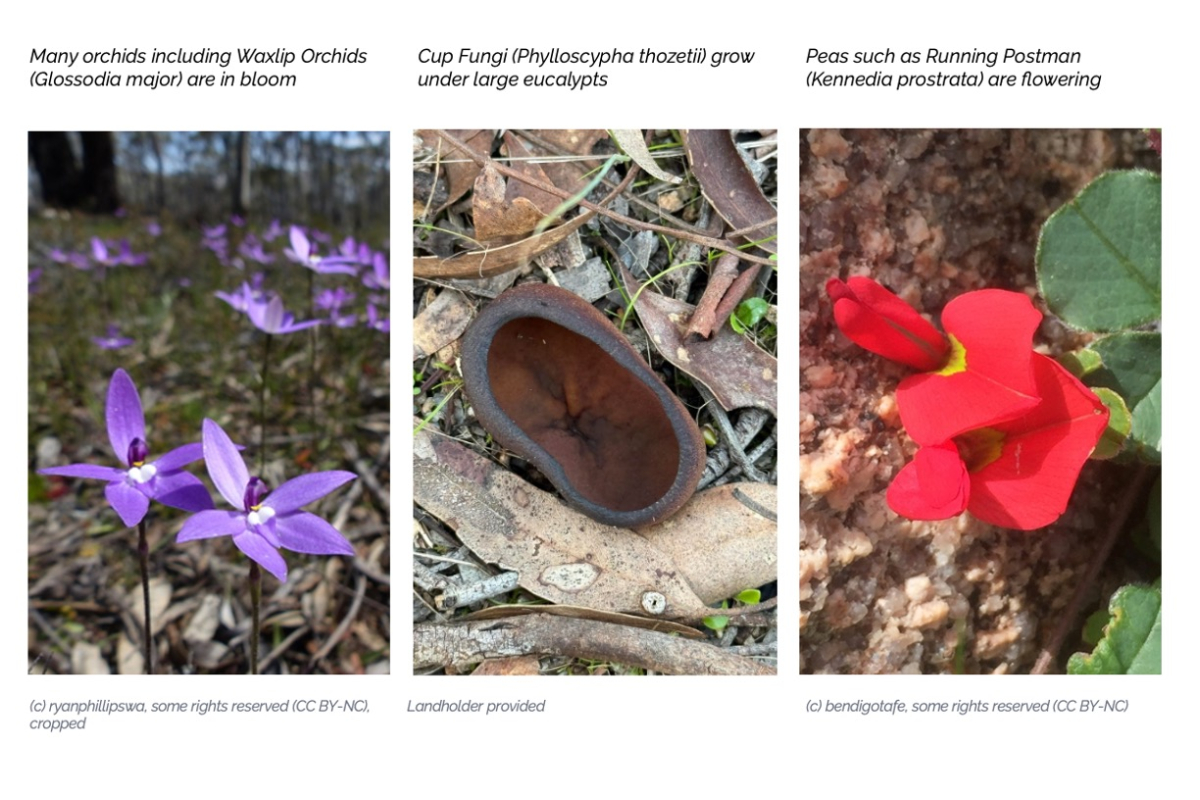
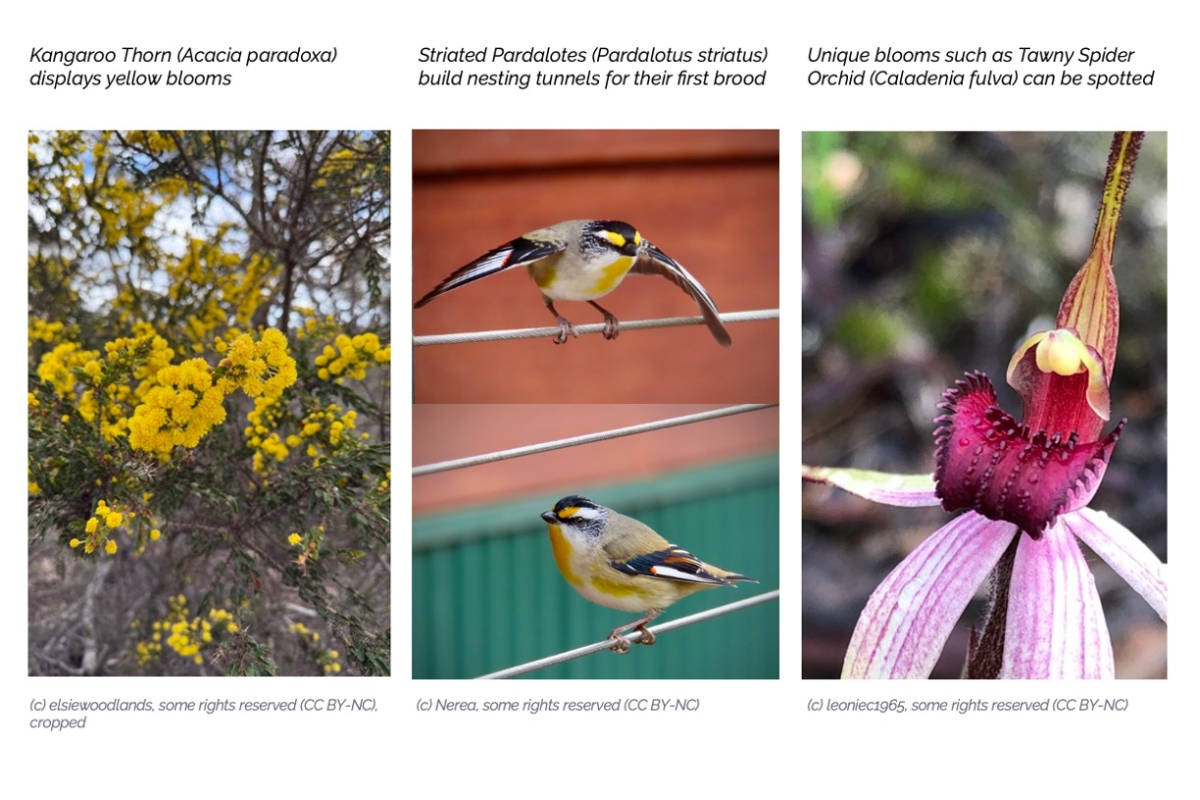
Pre-spring (late July to August) is known as Larneuk – season of nesting birds in the Brambuk seasonal cycle of the Gariwerd region. In our local area, this means:
Many locals and visitors have captured images in Black Range during Larneuk, either sharing on the iNaturalist platform or with the committee directly. In recent weeks, we have had deep soaking rains and slightly warmer weather, with bright blooms including orchids popping up early through the Range.
5 September 2026 (Saturday) - Field Day with with Gwyn Jones: Reading the landscape - what are weeds telling us? 9:30am - 4:00pm (see details below)
6 September 2026 (Sunday) - Gwyn Jones private consultations about weeds and addressing soil erosion on individual landholdings 9:30am - 11:30am (see details below)
20 September 2026 (Sunday) - Invasive Plants Workshop - Thinking and Doing Different Approaches 1:30pm - 4:30pm (see details below)
21 November 2026 (Saturday) - BRLMG Annual Gathering + AGM, Bunjils Shelter Reserve 10:00am-2:00pm (details to be advised)
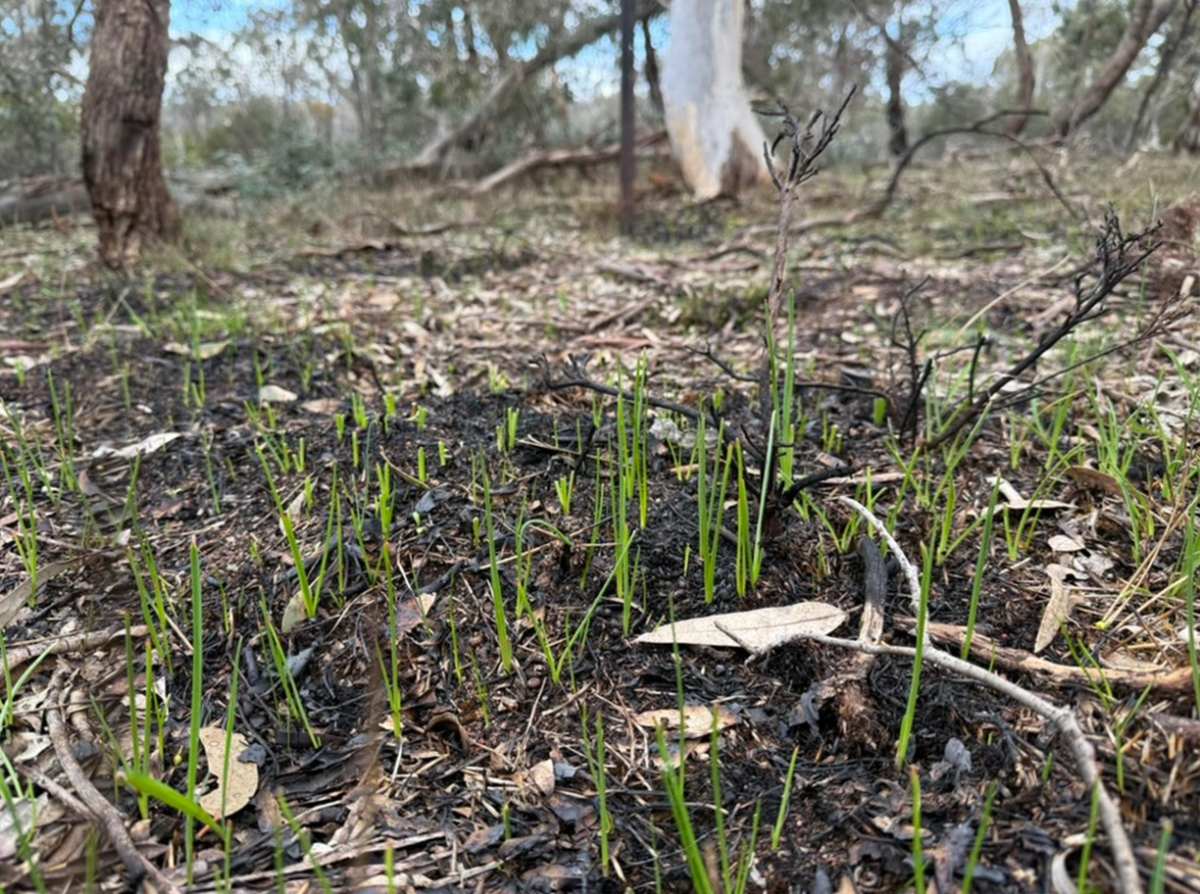
Eight members gathered, four weeks after BGLC fire rangers undertook cool burning of a half hectare area of Black Range in late May, of which 30 percent burnt. Unfortunately a clash with a Gariwerd APS (Australian Plants Society) event prevented a few keen members attending. The suitable seasonal windows for cool burning were brief, with early good rains starting in April and early May, and also consistently in the weeks after the burn. It was visually evident that chocolate lilies were spouting and leafing up more vigorously and densely in an area of recently burnt sedge dominated ground cover, than in the surrounding unburnt area. (And a few weeks later, these were heavily grazed down to earth.) We also walked through areas burnt 1, 2 and 3 years ago, noticing that a few 2m established Allocasuarina muelleriana (slaty sheok) shrubs had not recovered after cool fire had risen into their foliage a year earlier, and that Isopogon ceratophyllus (horny cone-bush) had flowered and seeded prolifically after the cool burn event, but the parent plant had not recovered.
In a warm shed over cakes and tea, we talked about ways of engaging with Traditional Owners, including through these cool fire tests, and the different motivations of people to do so. Of note was one member saying that their life felt deeply enriched and more meaningfully connected to place through learning alongside traditional owners about Country, including by having the assumptions about ‘nature’ inherited from their own cultural background challenged. A brief set of BRLMG Guidelines for Traditional Owner Engagement will be presented at the AGM.
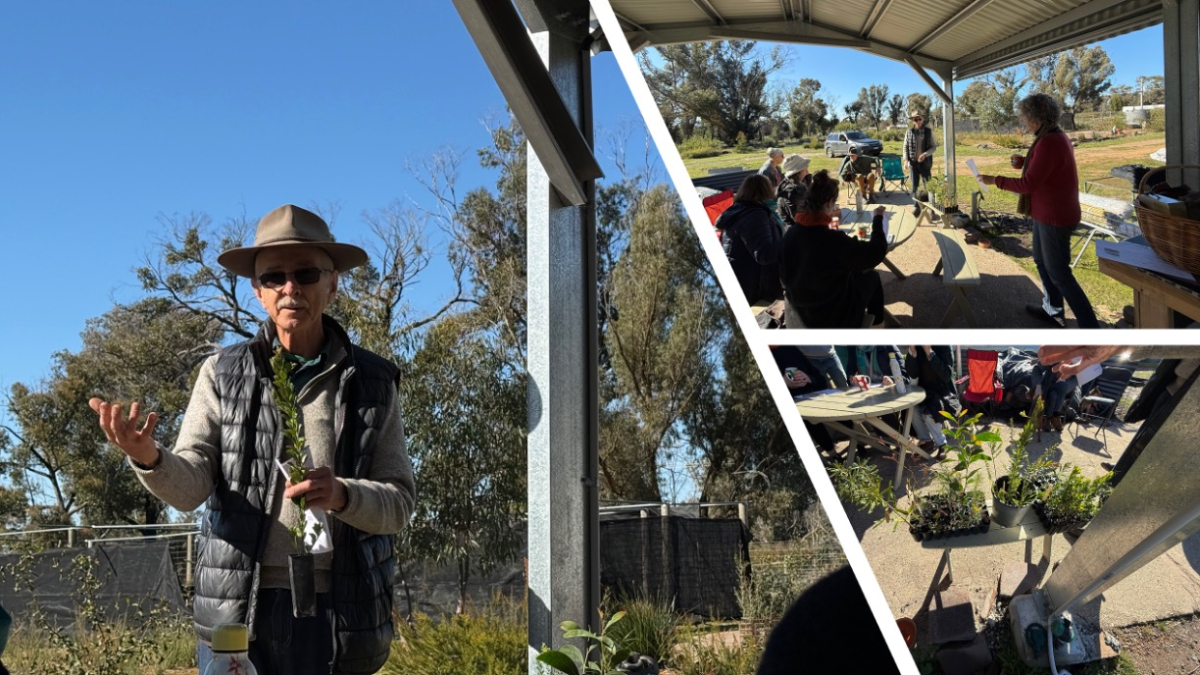
10 members gathered at the Pomonal Community Nursery on Sunday 2 August to collect their plants, enjoy morning tea and catch up with fellow Black Rangers. Neil Marriott gave a very helpful talk on the plants struck this round by Dalki Garringa, and Tanya Coburn prepared a useful guide and comments on how successfully the plants were propagated from seed.
Neil also shared some handy planting advice, including the value of grouping certain species, such as Clematis, where male and female plants are needed. Some plants are still to be collected, so please contact Tanya on [email protected] or 0422 019 970 if you need details of how to collect yours.
When: Saturday 5 September 2026, 9:30am - 4:00pm; Where: RSVP to [email protected] or 0422 019 970 to receive address
Gwyn Jones, director of Integrated Agriculture and author of ’Turning weeds into solutions: read the weed’ will present a field day to explore a systemic approach to weeds. The day will involve visits to three Black Range landholdings to present Gwyn’s unique approach to thinking about weeds in local plant succession, as environmental indicators, and as part of the repair of soil health, as well as knowing when and when not to use herbicide. Gwyn will help us apply his theories to our local context, respond to our questions and demonstrate a local plant succession. We will enjoy a shared lunch so bring a plate to share or to suit your own dietary needs.
When: Sunday 6 September 2026, 9:30am - 11:30am; Where: RSVP to [email protected] or 0422 019 970 to receive address
In this optional extra session, Gwyn will focus more on erosion control and responding to climate change. Gwyn will also be available on the afternoons of Friday 4 September and Sunday 6 September for private consultations about weeds and addressing soil erosion on individual landholdings if required. Please let Tanya Coburn know if you would like more information about this option.
These events are hosted by the Black Range Land Management Group, and the project ‘Black Range resilient biodiversity through inspired community action on pests’ is supported by the Victorian Government through the Department of Energy, Environment and Climate Action (DEECA) Partnership Against Pests Grants Program.
When: Sunday 20 September 2026, 1:30pm - 4:30pm; Where: RSVP to [email protected] to receive address
This workshop will span big picture thinking and hands-on show and tell demonstrations of different approaches to thinking about and responding to invasive plants. It aims to have us landholders informed about invasive plants, aware of our priorities and efforts as stewards of biodiversity, and mindful of the viability and impacts of what and how we choose to do.
Mark Farrer will give a big picture overview of the most invasive of pest plants, and consider what we can learn from the key case study examples: bone seed in the You Yangs; sallow wattle in Gariwerd, discussed by Parks Victoria Conservation Officer Julie Croce; Wimmera Riparian Protection Program, discussed by Project Platypus’ Loki McIntyre.
Tanya Coburn will facilitate a discussion of how Gwyn Jones’ Systemic and Plant Succession approach might be applied in Black Range.
Mick Douglas invites all members to show and tell their approaches and tools to invasive plants, with Tanya sharing solarising and solarising weeds and observation practices, Neil on mosaic burning, Mick on flame torch and wick-wiping cape tulip. Please come show and tell your approaches to invasive plants!
Workshop supported by the Victorian Government through the Department of Energy, Environment and Climate Action (DEECA) Partnerships Against Pests Grants Program.
By Neil Marriott, life member
Ever since Wendy and I put up our vermin-proof fence we have had an ever increasing number of native orchids colonising our grassy woodland areas, particularly where we have carried out mosaic burning to remove annual weeds.
One of the most spectacular of these orchids has been the Sun Orchids known botanically as Thelymitra species. Over the last few years we have had a lot of a large and showy purple-blue sun orchid appearing, flowering profusely and setting lots of seed for new plants in following years. I have been uploading photos of the plants I am finding in the Black Range onto iNaturalist, so we will eventually get a large collection of photos of all the plants in the Black Range. These can be readily accessed by everyone who logs in to iNaturalist and does a search of plants in the Black Range.
A month or two ago I lodged a photo of a beautiful sun orchid that we have been admiring for the last few years. The beauty of iNaturalist is that the pictures you upload are viewed by people, including experts from all over Australia, and all over the world for that matter, who can then make suggestions as to the correct name of the plant, bird, animal, fungi, insect etc that you have posted.
Imagine my amazement when the orchid that I had posted from here in the Black Range, turned out to be a new species, just scientifically described. And the confirmed identity came from the very botanist who described the new species!! This is the beauty of iNaturalist -it is used by amateurs as well as the experts!!
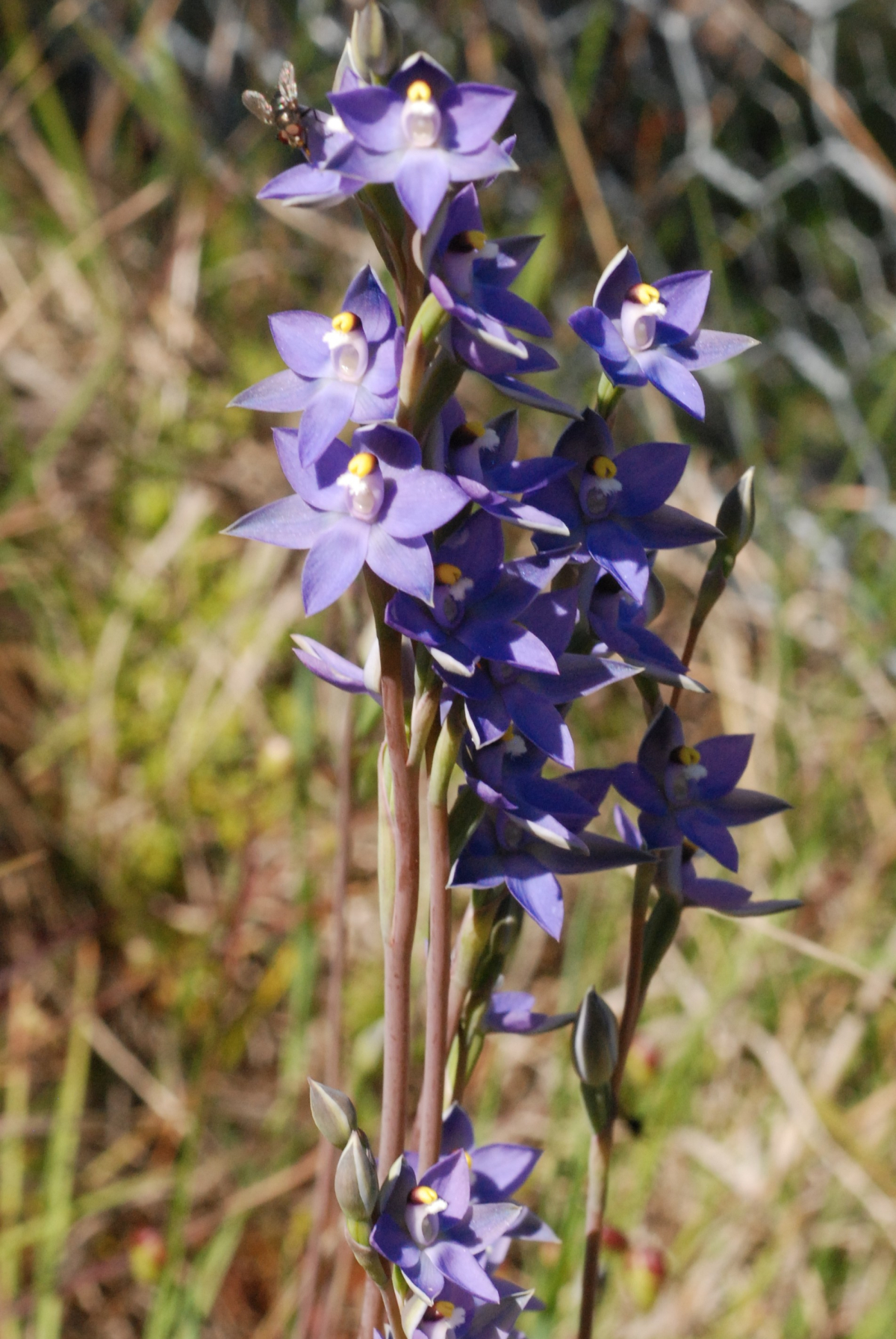
So we now have Thelymitra serpentina as a brand new species for the Black Range! This is the first record for the Black Range/Stawell area, but it has also been recorded for Jallukar State Forest east of Pomonal. It has also been recorded for the Frankston-Mornington Peninsula area, as well as Balmoral in SW Vic and in the Mt Lofty Ranges in SA. Etymology: Latin serpentina (snake-like), an allusion to the shape of the column, with the combination of the tapering and grooved post-anther lobe and singular trichome tuft, resembling the head of a snake.
I urge members to download the iNaturalist app and start photographing and uploading your photos -you will soon get a great collection of the plants that you find on your property or nearby in the Range!! Who knows what other beauties we will find?? And all our members can then go online and see the lovely plants growing in the Range, and get the correct names for these plants on their own property!!
On the other side of Black Range, life member Anne Davis reports that Elwyn has had great success in cutting propagation of the local boobialla, which was down to one known plant in the Range until the group started replanting. Neil notes that this is Myoporum petiolatum which our group has brought back from the brink of extinction in the Range.
Boneseed: This years high soil moisture continues to allow boneseed plants to be hand pulled out of the ground easily. The Landmate crew have conducted boneseed control over 180 hectares in and around the Black Range during July.
Bridal Creeper: the cold temperatures have restricted Bridal Creeper growth over the winter. Looking like early to mid spring will be the optimum time for chemical control when the plants are actively growing and before fruiting. When digging out isolated plants, the
whole tuberous root system needs to be removed from the soil.
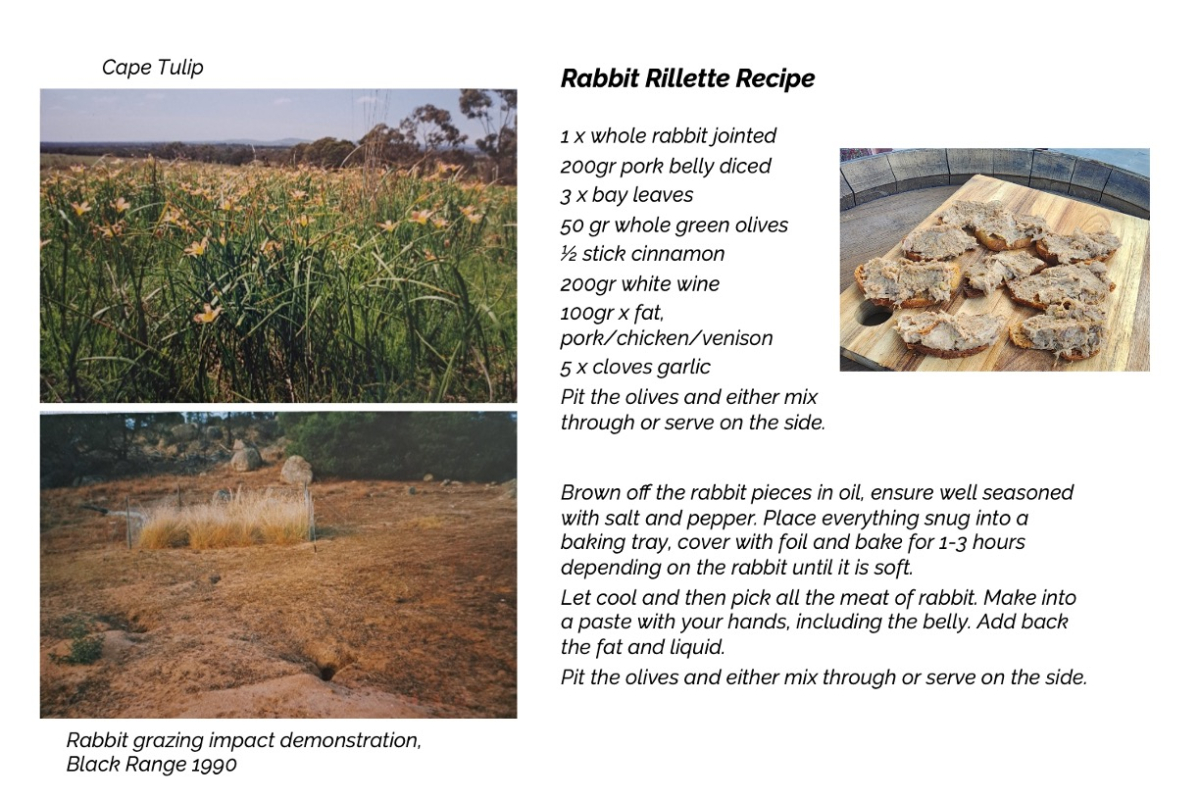
Cape Tulip: Is growing well at infestation sites around the Back Range, and control should take place before it sets seed in late September/early October. Wet boggy ground may delay access for control at some sites this year. For more information go to this website: weeds.org.au/profiles/cape-tulip-one/
Rabbits: During June/July the Landmate crew spent 19 days undertaking rabbit warren fumigation on 16 landholdings across the Black Range. 483 rabbit warrens were fumigated using 4750 fumigant tablets. A total of 1,963 rabbit warren fumigation treatments across the Black Range have been undertaken by Landmate over the last 4 years. The continuing grazing pressure exerted by rabbits and other invasive animals on the Black Ranges native flora, continues to put at risk the long-term health and resilience of the ranges ecosystem.
Recipe of the season: Following our successful feral game dinner event in April which aimed to educate and inspire diners to explore ‘eating the feral problem’, we are pleased to share a third recipe from the night: Rabbit Rillette . Thanks to Adam Racina at La Pinta Restaurant for sharing this recipe with BRLMG.
The Black Range Landholders WhatsApp is a great communication tool for members and other local landholders to share upcoming external events (eg hosted by Landcare Vic, Project Platypus, Australian Plant Society) as well as informal landholder-led activities.
Did you know that BRLMG has a number of assets for members to borrow? These include wildlife monitoring cameras, a selection of cat and fox traps, a wide range of fencing tools and a library of books. Full list available on the website under 'Resources'.
Please contact [email protected] with any enquiries.
