Winter (late May to end of July) is known as Chunnup – season of cockatoos in the Brambuk seasonal cycle of the Gariwerd region. In our local area, this means:
Freezing winds
Coldest time of year
Bleak mists
Rain
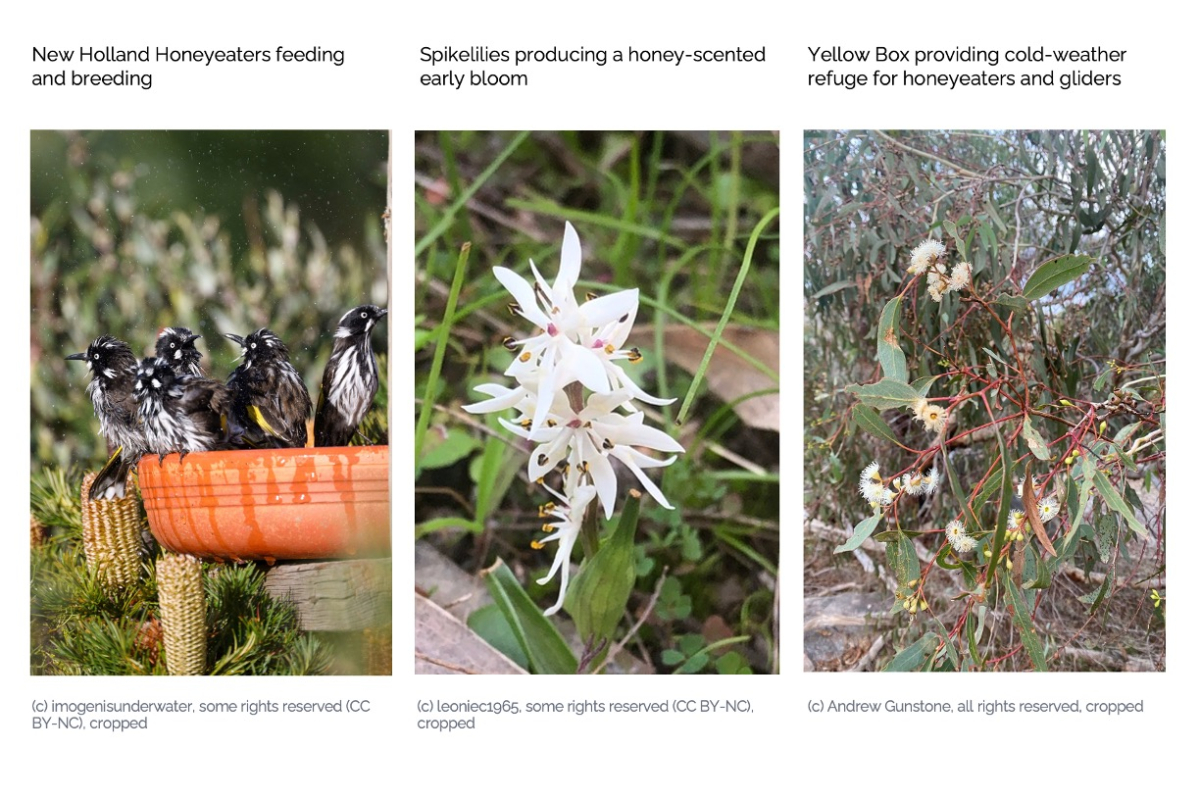
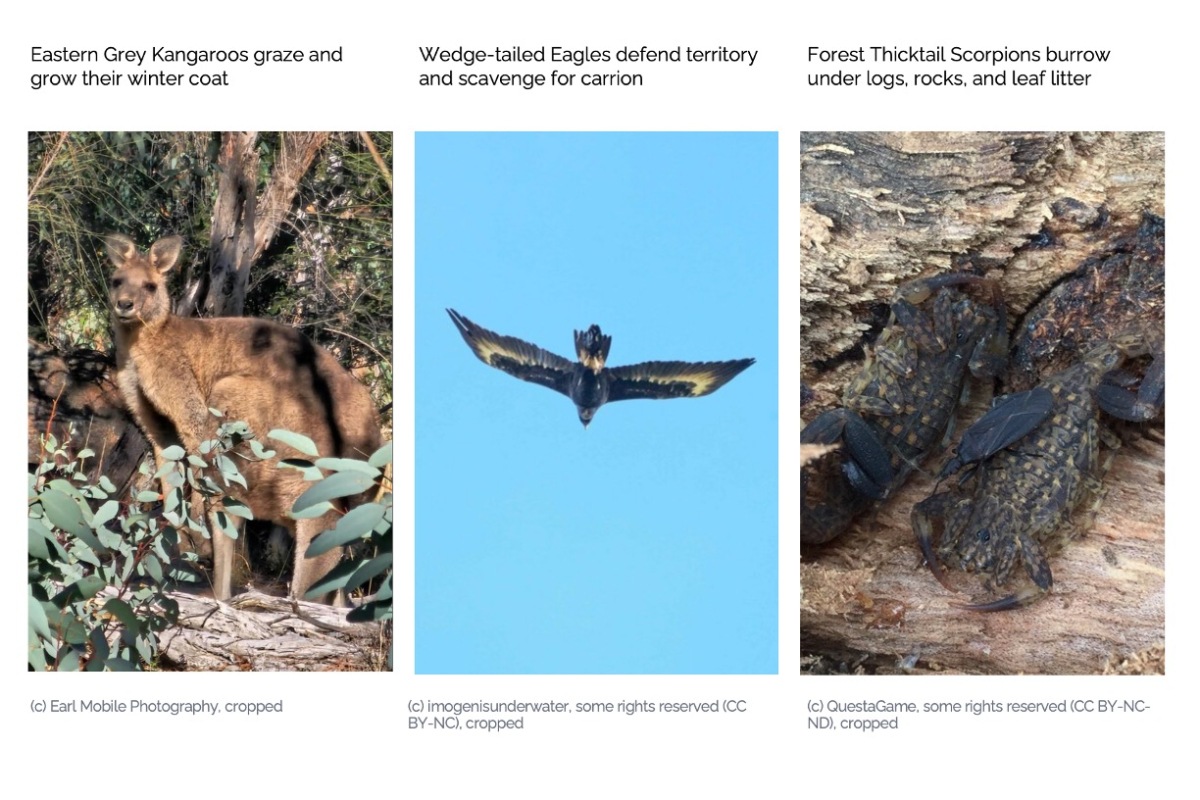
Many locals and visitors have captured images in Black Range during Chunnup, either sharing on the iNaturalist platform or with us directly. If you would like to contribute your photos to future newsletters, please send to [email protected] (noting time of year taken).
20 June 2026 (Saturday) - Reading Fire Country #3, 2:00pm - 4:00pm (see details below)
From Late June - Membership Renewals for 2026-2027 (see below)
5 September 2026 (Saturday) - Field Day with with Gwyn Jones: Reading the landscape - what are weeds telling us? 9:30am - 3:30pm (see details below)
10 October 2026 (Saturday) - Pest Plants Workshop, 10:00am - 2:30pm (details to be advised)
Gathering to walk and talk through observations of an area of recent cool burning, followed by afternoon tea around a fire to have a yack about:
Renew (or commence!) your BRLMG membership to enjoy access to workshops and events, discounts on paid gatherings, and the ability to borrow fencing tools, wildlife cameras, and pest traps. Receive free native plants and make use of support from the Landmate crew for weed, rabbit, and minor erosion control. New plant stock is arriving soon - rejoin early to secure your share.
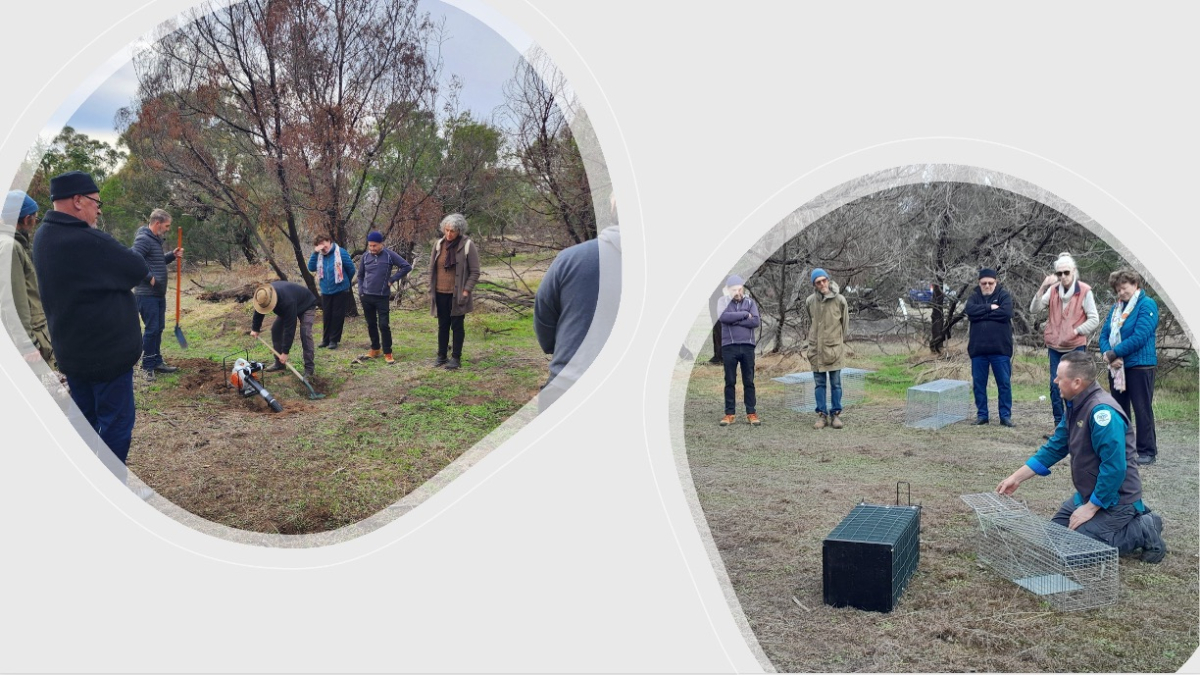
On Saturday 23 May 2026, 12 Black Range landholders attended a demonstration session on how to, use a rabbit warren fumigation smoker, how to trap foxes and feral cats and how to use a Canid Pest Injector to poison foxes.
Group member Mark Farrer demonstrated the use of the warren smoker, which found a small 'pophole' escape route covered in grass, that wouldn't have otherwise been found without the pressurised smoke exiting the warren. The warren smoker purchased with Partnerships Against Pests (PAP) grant funds is available for Black Range landholders to use.
Grampians/Gariwerd Ranger Joe Terry gave an informative demonstration on the finer points of how to trap foxes and feral cats. He talked about and demonstrated how to take advantage of feral cat curiosity behaviour in order to encourage them into a cage trap. Fox and feral cat traps have been purchased by the group and available to landholders. Pick up some trapping tips when you pick up the traps.
Lachlan McIntyre from Project Platypus gave a demonstration on how to set a Canid Pest Injector to poison foxes. Further Information. Note: An Agricultural Chemical Users permit is required to use this device which utilizes 1080 poison.
Gwyn Jones, agricultural consultant and expert on unwanted plants, held an introductory webinar on 28 May 2026, attended by Black Range Land Management Group members and friends.
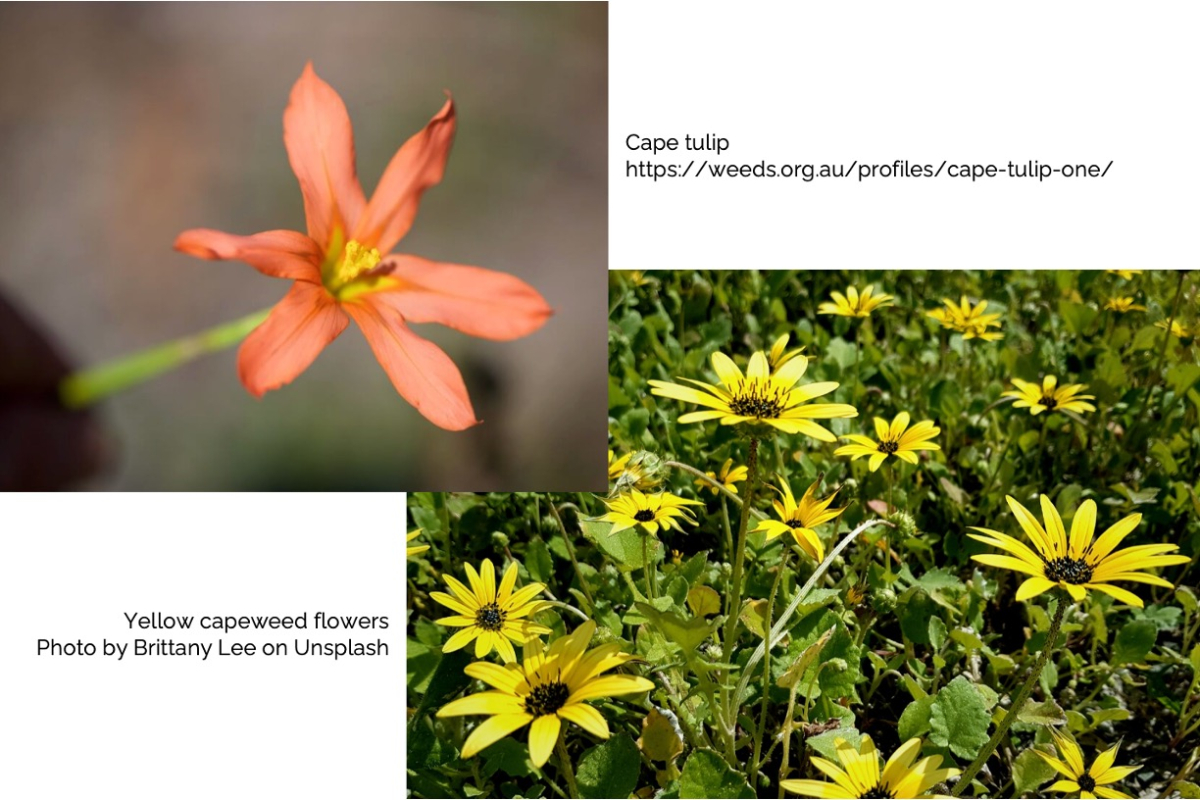
Gwyn began the session by asking us to name a plant of concern to us and to describe what we thought its function or purpose may be. It was a good introduction to his method of thinking systemically about what the natural world is telling us through the kinds of plants that grow in particular contexts, and the reason why they emerge there.
He went on to talk about plant succession and how to think about moving the succession towards more desired plant species. Gwyn also suggested some innovative ways to address plant removal of some plants. He warned us about the rise of nitrate plants like Capeweed with the first rains after dry weather in our environment at the Black Range. He observed that in our depleted soils, many of the plants that emerge after a disturbance are at the bottom of the plant succession hierarchy (frequently ‘Gold Nugget’ plants using Gwyn’s terminology) which store nutrients beneath the soil to survive dry seasons and then emerge with the rain
If you’d like to listen to the webinar it’s available at this link. We also have some copies of Gwyn’s book, ‘Turning weeds into solutions: read the weed’ in our library. If you’re interested in further resources Gwyn offered us, click these links for ‘Soil health: the journey’ and ‘Better farming’. A field day with Gwyn will be held on Saturday 5 September 9.30am-3.30pm with optional visits to individual landholdings on Sunday 6 September. Please contact Tanya Coburn [email protected] for details or to book your place.
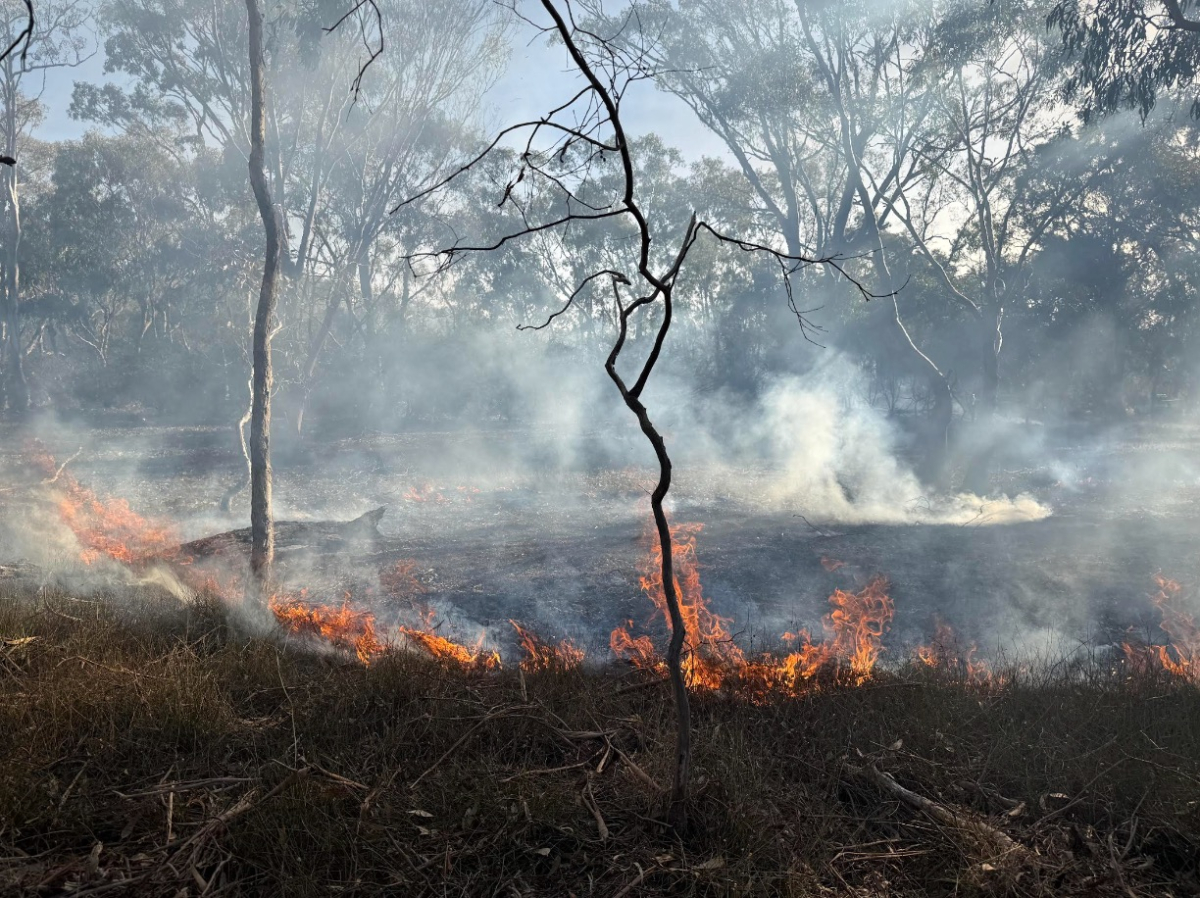
In late May, Barengi Gadjin Land Council fire rangers led the fourth annual test of walpa cool cultural burning in Black Range, funded by a Victorian Landcare Grant.
After good rains in early May, the ground moisture was still high. The area selected for the burn by the rangers was based around three primary factors: potential for successfully cool burning in the given conditions between dryness and moisture levels; an area which had evidently not experienced fire in some decades, and which suggests an interesting possible response to cool fire; and importantly, existing landscape features providing containment lines for managing the possible spread of fire.
There is an often repeated phrase ‘It’s easy to put fire into the landscape, it’s much harder to take it out.’ Fire Ranger vehicles - Landcruisers with slip-on water tanks with 30metre pump hoses - were on standby to suppress fire if needed.
The event is kept small scale to respect the cultural importance of this cool fire practice to First Nations people, and support the fire rangers undertake the test with as few barriers as possible. For this reason, and for safety, visitors to the site were not possible. The new lead Fire Ranger at BGLC had just commenced the role, two crew were well familiar with the recent years of cool burning in Black Range, and three rangers were on this part of Country for the first time.
I made a kangaroo tail and vegetable stew to feed the crew on meeting, which went down well. By 1pm, the sun had evaporated moisture, winds were light northerly, and the lighting up could commence with the crew of six rangers. By 3.30pm moisture levels were rising and fire struggling. A small area of sedge grass was the most readily able to support fire trickling around.
A mosaic patchwork of approximately 25% of the 1/3 hectare landscape area was burnt, with fire burning where it wanted to. Ground fuel at the base of larger trees like yellow gums was raked away to prevent fire entering the root system or climbing up the bark, with some smaller smooth barked saplings left to experience the low flame. I placed five steel posts throughout the area to mark photo points to document ‘before’ and 'response after’ the fire over time. Insects were observed taking the time to move away from flames. The rangers supported two turtles move away from trickling fire faster than they could, walking them to a nearby water source.
Having observed over a couple of years now, I very much appreciate the calm and cleansing qualities of this cool cultural burning practice. I get some sense of what it can teach, and am grateful to the fire rangers and Traditional Owner mobs that extend their trust in working with our Black Range Group.
Mick Douglas , BRLMG Chair
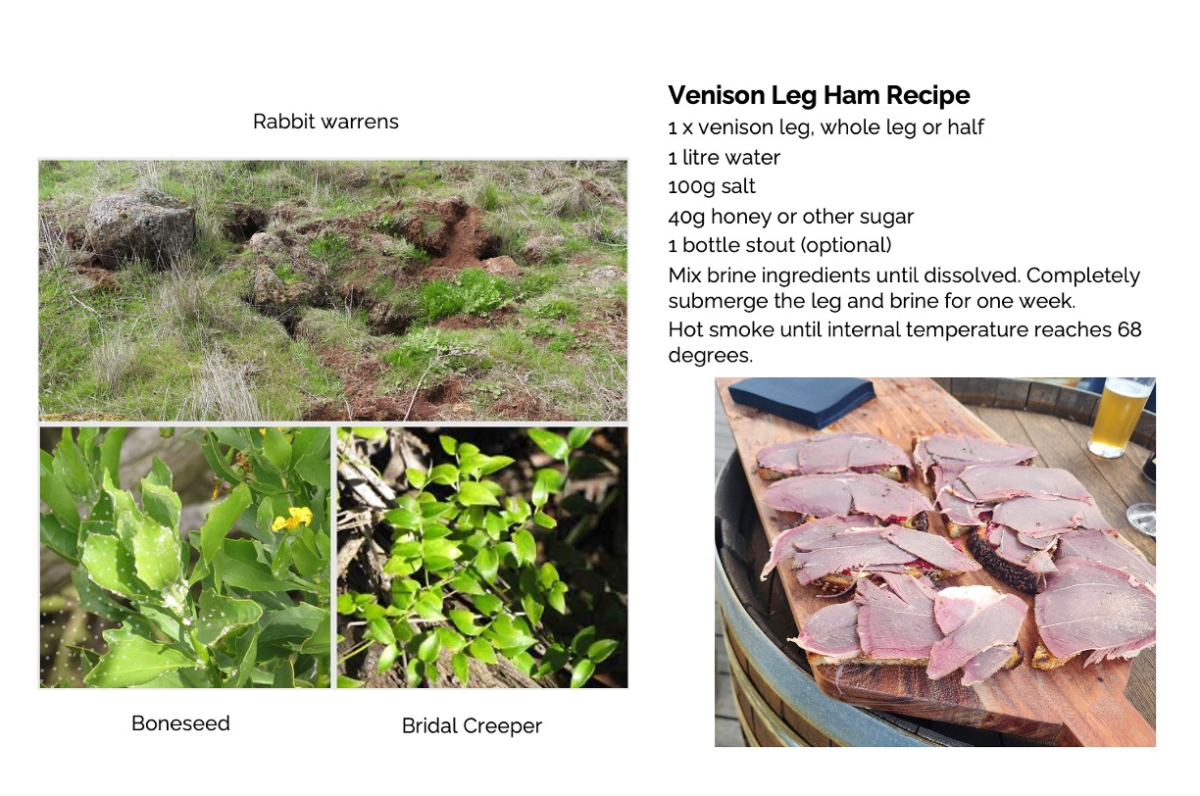
Rabbits: Warrens are best fumigated when there is plenty of soil moisture and humidity within the warren system and before the breeding cycle is in full swing, ie: winter. The fumigant (Aluminium Phosphide) requires moisture to activate the phosphine gas into the warren system. The Ararat Prison Landmate Crew will be available to undertake rabbit warren fumigation for Black Range landholders during the June/July period. Contact Mark Farrer on 0491133779 if you would like this assistance. Remember, it takes less then one rabbit per hectare to prevent the successful regeneration of many of our common native trees and shrubs.
Boneseed & Bridal Creeper: The two highest priority invasive plants in the Black Range - Boneseed and Bridal Creeper, are best tackled during the winter early spring period before they flower and fruit. Boneseed plants are more easily pulled out when soil conditions are moist. Small Bridal Creeper plants can be dug out, but make sure you get all the underground runners, rhizomes and tubers. As birds and herbivores eat and spread the fruit of these plants, constant surveillance during the winter growing season is required. Check the bottom of trees or fences where birds are roosting. BRLMG has chemical available to Black Range landholders for control of these invasive plants. Contact Mark Farrer
Recipe of the season: Following our successful feral game dinner event in April which aimed to educate and inspire diners to explore ‘eating the feral problem’, we are pleased to share a second recipe from the night: Venison Ham. Thanks to Adam Racina at La Pinta Restaurant for sharing this recipe with BRLMG.
The Black Range Landholders WhatsApp is a great communication tool for members and other local landholders to share upcoming external events (eg hosted by Landcare Vic, Project Platypus, Australian Plant Society) as well as informal landholder-led activities.
Did you know that BRLMG has a number of assets for members to borrow? These include wildlife monitoring cameras, a selection of cat and fox traps, a wide range of fencing tools and a library of books. We are working to get the full list onto the website shortly.
Please contact [email protected] to enquire about any of the above.
